Built for demanding work that is repetitive, fast-paced, hot, physical, or overlooked.
WorkEddy was created to move workplace safety from injury response to evidence-based prevention. Many organizations know when workers are hurting, but they do not always have a clear, trustworthy way to connect task-level strain to corrective action and documented improvement.
WorkEddy brings authorized task observation, structured ergonomic assessment, body-region information, worker feedback, corrective-action tracking, follow-up reassessment, and privacy controls into a connected prevention workflow.
A prevention-evidence workflow from risk identification to de-identified learning.
WorkEddy supports task-level review by helping safety teams capture or document work tasks, assess ergonomic risk, identify affected body regions, incorporate worker feedback, recommend corrective actions, assign responsibility, verify completion, and compare before-and-after results.
See why WorkEddy is different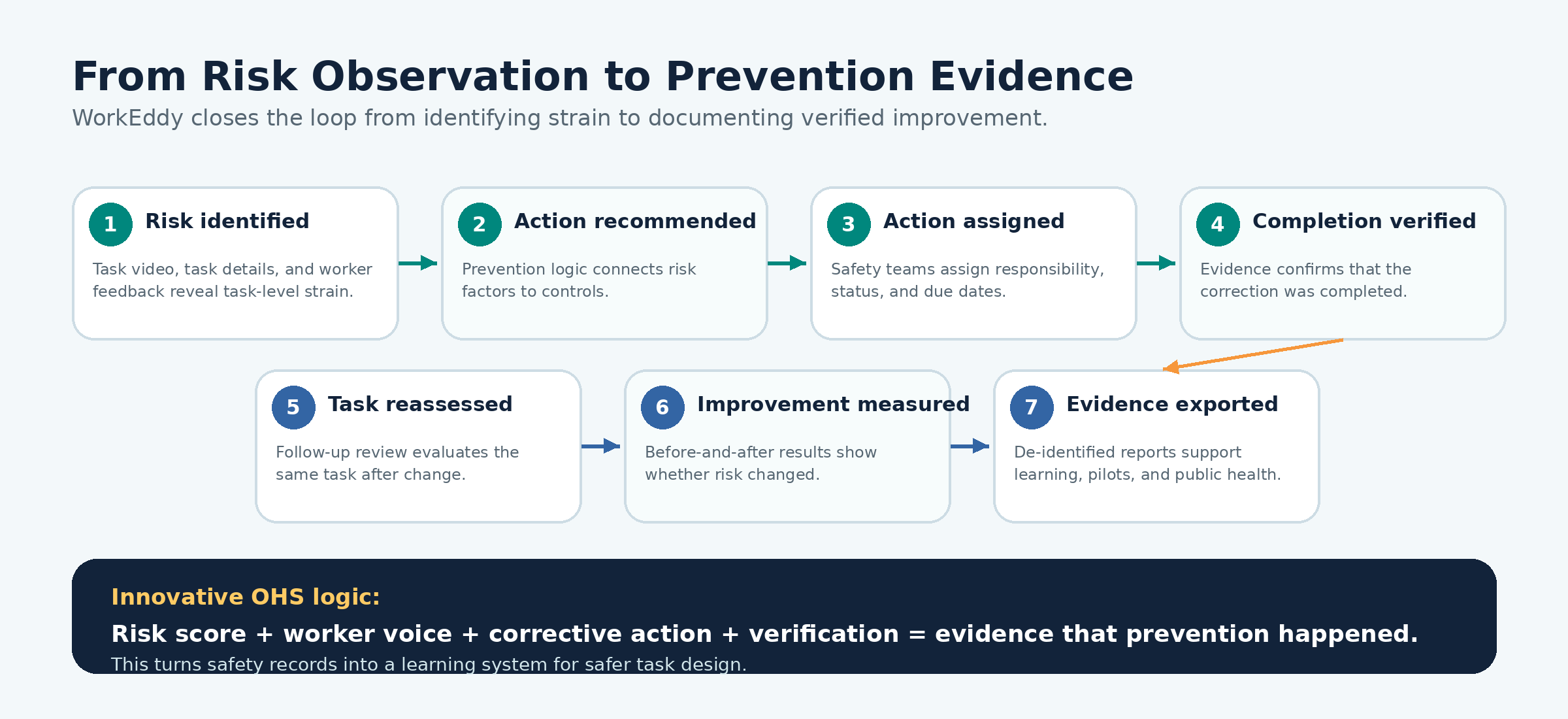
Prevention work that stays tied to the task.
WorkEddy is not another checklist. It is a prevention-evidence platform designed to help organizations identify risks earlier, act faster, protect worker trust, and learn from corrections that make work safer.
Identify risk earlier
Support earlier identification of task-level ergonomic risk factors, including awkward posture, repetition, forceful exertion, and manual material-handling concerns
Include worker voice
Connect discomfort, task difficulty, and suggested changes to prevention decisions.
Assign corrective action
Translate risk findings into responsible owners, due dates, evidence, and follow-up.
Document improvement
Compare before-and-after results and create de-identified prevention evidence.