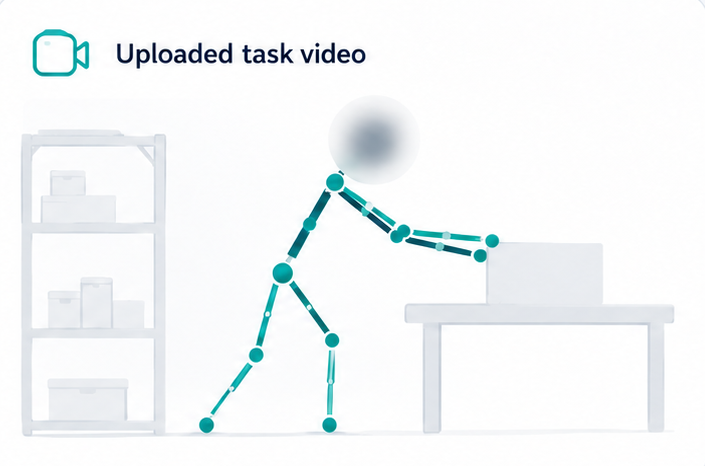
When assessment findings, corrective actions, and follow-up evidence are stored in separate systems, it may be difficult to determine who was responsible, what action was completed, and whether the task was reassessed.
- Hazards can become static notes.
- Corrective action ownership is hard to trace.
- Follow-up evidence may be scattered or missing.
- Workers can feel observed instead of protected.
Risk becomes an organized prevention loop.
- Task review stays connected to body-region insights.
- Recommended controls become assigned actions.
- Follow-up evidence and reassessment document whether measured task-level risk changed.
- Consent, de-identification, access control, and human review protect trust.
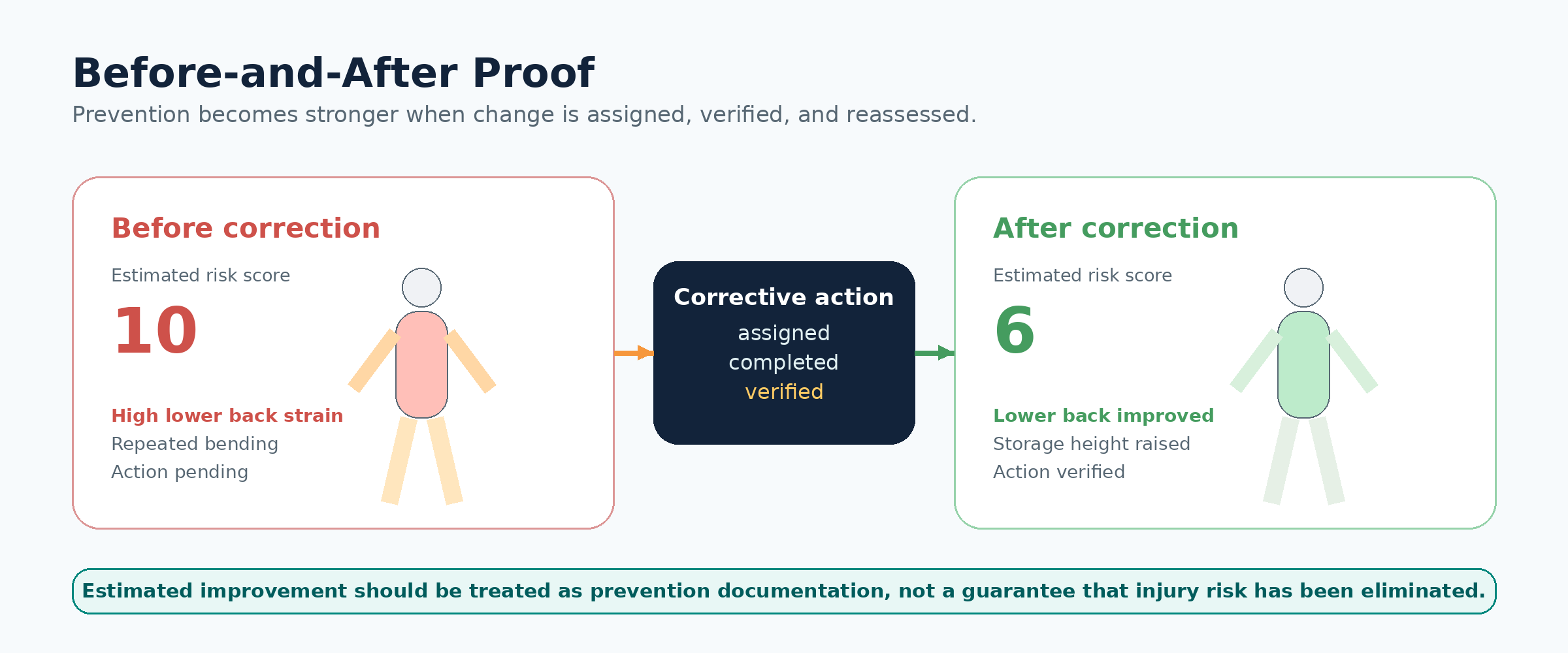
The platform is designed around action, verification, and learning.
Prevention loop, not checklist
Assign corrective actions, verify completion, reassess the task, and document whether risk changed.
Task-level visibility
Focus on where strain, awkward posture, repetition, force, fatigue, heat, and discomfort first appear.
Worker voice without worker blame
Structure discomfort and task feedback around work design, tools, workload, staffing, pace, exposure, and controls.
Privacy-protective prevention
Depending on the configured and available features, WorkEddy supports worker notice or authorization, reduced-identification workflows, controlled access, retention management, and human review.
Human-reviewed technology
Technology-assisted features may identify visible posture and movement patterns for reviewer consideration. A qualified user confirms the task context, method inputs, score interpretation, and recommended response before findings are used.
Corrective action that can be tracked
Risk factors connect to recommended controls, responsible owners, status, evidence, and follow-up review.
Public health value
De-identified prevention evidence can support pilots, research, employer learning, grant applications, dashboards, and occupational health improvement.
Sustainable work design
Protecting workers, redesigning harmful tasks, and reducing preventable harm belong to a more sustainable future of work.